


What You Need To Know
Belize is a country on the eastern coast of Central America. It is the only country in Central America whose official language is English, though Belizean Creole (Kriol) and Spanish are also commonly spoken. Belize is bordered on the north by Mexico, on the south and west by Guatemala, and on the east by the Caribbean Sea. Its mainland is about 290 km (180 mi) long and 110 km (68 mi) wide. With 22,800 square kilometres (8,800 sq mi) of land and as of 2015 a population of 368,310, Belize has the lowest population density in Central America. The country’s population growth rate of 1.87% per year (2015) is the second highest in the region and one of the highest in the Western Hemisphere. Belize’s abundance of terrestrial and marine species and its diversity of ecosystems give it a key place in the globally significant Mesoamerican Biological Corridor. Belize has a diverse society, composed of many cultures and languages that reflect its rich history. Belize is considered a Central American and Caribbean nation with strong ties to both the Latin American and Caribbean regions. It is a member of the Caribbean Community (CARICOM), the Community of Latin American and Caribbean States (CELAC), and the Central American Integration System (SICA), the only country to hold full membership in all three regional organisations. Belize is a Commonwealth realm, with Queen Elizabeth II as its monarch and head of state. Belize is known for its September Celebrations, its extensive coral reefs, and punta music.
Area: 22,966 km²
Current Population: 366 613 more information….Countrymeters
Currency
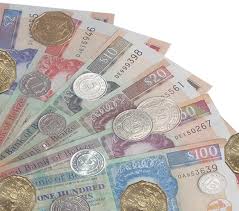
The Belizean Dollar is the currency of Belize. Our currency rankings show that the most popular Belize Dollar exchange rate is the USD to BZD rate. The currency code for Dollars is BZD, and the currency symbol is BZ$.
Belize Barrier Reef
Economy
Belize has a small, mostly privatized enterprise economy that is based primarily on export of petroleum and crude oil, agriculture, agro-based industry, and merchandising, with tourism and construction recently assuming greater importance. As of 2007, oil production was 3,000 bbl/d (480 m3/d) and as of 2006 oil exports were 1,960 bbl/d (312 m3/d). The country is also a producer of industrial minerals. In agriculture, sugar, like in colonial times, remains the chief crop, accounting for nearly half of exports, while the banana industry is the populations’s largest employer. The new government faces important challenges to economic stability. Rapid action to improve tax collection has been promised, but a lack of progress in reining in spending could bring the exchange rate under pressure. The tourist and construction sectors strengthened in early 1999, leading to a preliminary estimate of revived growth at 4%. Infrastructure remains a major economic development challenge; Belize has the region’s most expensive electricity. Trade is important and the major trading partners are the United States, Mexico, the European Union, and Central America. Belize has five commercial banks, of which the largest and oldest is Belize Bank. The other four banks are Heritage Bank, Atlantic Bank, First Caribbean International Bank, and Scotia bank (Belize). A robust complex of credit unions began in the 1940’s under the leadership of Marion M. Ganey, S.J., and is a continuing resource for the betterment of the peoples across economic and cultural lines.
Government and politics
Healthcare and Security
Healthcare in Belize
Is provided through both public and private healthcare systems. The Ministry of Health (MoH) is the government agency responsible for overseeing the entire health sector and is also the largest provider of public health services in Belize. The MoH offers affordable care to a majority of Belizeans with a strong focus on providing quality healthcare through a range of public programs and institutions. In contrast to the public health sector, the private health sector provides care to a smaller portion of the population. However, similar to the public sector, private health services are offered at a relatively low cost with a shared emphasis on quality of care and quality improvement.
Armed Security forces
Language
The major languages spoken in Belize include English (official), Kriol, and others.
Political culture
Since 1974 the party system in Belize has been dominated by the centre-left People’s United Party and the centre-right United Democratic Party, although there have been other small parties that have participated at all levels of elections in the past. Though none of these small political parties have ever won any significant number of seats and/or offices, their challenge has been growing over the years.
Species
The Belize Barrier Reef is home to a large diversity of plants and animals, and is one of the most diverse ecosystems of the world:
- 70 hard coral species
- 36 soft coral species
- 500 species of fish
- hundreds of invertebrate species
With 90%} of the reef still to be researched, some estimate that only 10% of all species have been discovered.
Tourism
A combination of natural factors—climate, the Belize Barrier Reef, over 450 offshore Cayes (islands), excellent fishing, safe waters for boating, scuba diving, and snorkelling, numerous rivers for rafting, and kayaking, various jungle and wildlife reserves of fauna and flora, for hiking, bird watching, and helicopter touring, as well as many Maya ruins—support the thriving tourism and ecotourism industry. It also has the largest cave system in Central America. Development costs are high, but the government of Belize has made tourism its second development priority after agriculture. In 2012, tourist arrivals totaled 917,869 (with about 584,683 from the United States) and tourist receipts amounted to over $1.3 billion.
Transportation
Public transport
Most Belizeans travel the country using public buses as their primary form of transportation. In the larger towns and cities, such as Belize City or Belmopan, there are bus terminals. In smaller places, there are bus stops. However, the most common way of catching a bus is by flagging it down on the road. On the Northern and George Price Highways, bus service is more frequent than on smaller highways and other roads. In some locations, like small towns, buses may run only once a day. Buses are classified as either Regular runs (usual prices) or Express runs (faster, for slightly higher prices). Some Belizeans prefer riding bikes due to traffic, or the time of day. Many buses are Greyhounds or school buses, although newer express buses travel the two main highways.
Roads
- total: 3,007 km
- country comparison to the world: 167
- paved: 575 km
- unpaved: 2,432 km (2006)
Belize has four major asphalt-paved two-lane roads: the Hummingbird Highway, Southern Highway, George Price Highway, and Northern Highway. Most other roads are unpaved, rough and in poor condition. A 9-mile (14 km) stretch of the Southern Highway near Big Falls is unpaved as well. Driving is on the right-hand side of the road.
Waterways
- 825 km (navigable only by small craft) (2008)
- country comparison to the world: 72
Ports
- Belize City
- Big Creek
Airports
- estimated 44 (2008)
- This number would rank it 97th compared to the rest of the world in terms of number of airports.
Commercial Aviation in Belize
As of 2008, an estimated 44 airports and airstrips were in operation. The international airport is Philip S. W. Goldson International Airport in Ladyville, 9 miles north of Belize City. Currently, the international airport is served by several international and local carriers. A runway expansion program set to be completed in 2007 may allow larger aircraft to land and may encourage new direct or nonstop service from Europe and Canada. There is a smaller airport with local service in Belize City itself.
Two airlines, Tropic Air and Maya Island Air, provide service within the country. Both airlines have service originating both the main airport (Philip S. W. Goldson), and Belize City Municipal Airport in the city. From here they serve San Pedro, Caye Caulker, Dangriga, Placencia, Punta Gorda, and to Flores in Guatemala, and one airline serves Savannah at Big Creek. There is also service from San Pedro to Sarteneja and to Corozal Town. The local airlines generally fly small single-engine equipment, such as the Cessna Caravan.
Railway
Belize has no railways. Dismantled lines include the Stann Creek Railway that linked Dangriga and Middlesex Estate; it was abandoned in 1937. Some of its bridges remain along the Hummingbird Highway.
The FERISTSA Railway was proposed to connect Mexico with Panama; if built, it might bypass Belize unless a branch were built.
Shuttles and Private Transfers
You can also book for transportation systems online before even coming to Belize. Belize Shuttles and Private Transfers offer transportation system throughout Belize; including all six districts, islands, and cayes.
Weather
Belize has a tropical climate with pronounced wet and dry seasons, although there are significant variations in weather patterns by region. Temperatures vary according to elevation, proximity to the coast, and the moderating effects of the northeast trade winds off the Caribbean. Average temperatures in the coastal regions range from 24 °C (75.2 °F) in January to 27 °C (80.6 °F) in July. Temperatures are slightly higher inland, except for the southern highland plateaus, such as the Mountain Pine Ridge, where it is noticeably cooler year round. Overall, the seasons are marked more by differences in humidity and rainfall than in temperature. Average rainfall varies considerably, from 1,350 mm (53.1 in) in the north and west to over 4,500 mm (177.2 in) in the extreme south. Seasonal differences in rainfall are greatest in the northern and central regions of the country where, between January and April or May, less than 100 mm (3.9 in) of rainfall per month. The dry season is shorter in the south, normally only lasting from February to April. A shorter, less rainy period, known locally as the “little dry”, usually occurs in late July or August, after the initial onset of the rainy season. Hurricanes have played key—and devastating—roles in Belizean history. In 1931 an unnamed hurricane destroyed over two-thirds of the buildings in Belize City and killed more than 1,000 people. In 1955 Hurricane Janet leveled the northern town of Corozal. Only six years later, Hurricane Hattie struck the central coastal area of the country, with winds in excess of 300 km/h (186 mph) and 4 m (13.1 ft) storm tides. The devastation of Belize City for the second time in thirty years prompted the relocation of the capital some 80 kilometres (50 mi) inland to the planned city of Belmopan. In 1978 Hurricane Greta caused more than US$25 million in damages along the southern coast. On October 9, 2001, Hurricane Iris made landfall at Monkey River Town as a 233 km/h (145 mph) Category Four storm. The storm demolished most of the homes in the village, and destroyed the banana crop. In 2007 Hurricane Dean made landfall as a Category 5 storm only 40 km (25 mi) north of the Belize–Mexico border. Dean caused extensive damage in northern Belize. The most recent hurricane to affect Belize directly was the Category 2 Hurricane Richard, making landfall approximately 32 km (20 mi) south-southeast of Belize City at around 00:45 UTC on October 25, 2010. The storm moved inland towards Belmopan, causing estimated damage of BZ$33.8 million ($17.4 million 2010 USD), primarily from damage to crops and housing.